The pause after a sending-off is not an invitation to take the bigger price. The match has changed, the market rules still apply, and the next decision should start with the state of the game.

A Football Red Card Makes the Next Live Bet a Different Decision

The referee reaches for the red card, the crowd reacts and the live prices vanish for a moment. When they return, the same football match can look like a completely different betting proposition. That is not an error in the market. It is an acknowledgement that the conditions have changed.
A red card is one of the clearest examples of why live football needs a pause between seeing an event and pressing a button. The card can alter the scoreline’s probability, the tactical shape, the remaining substitutions and the next fixture. It can also trigger a suspension while the operator and its data feeds settle on what has happened.
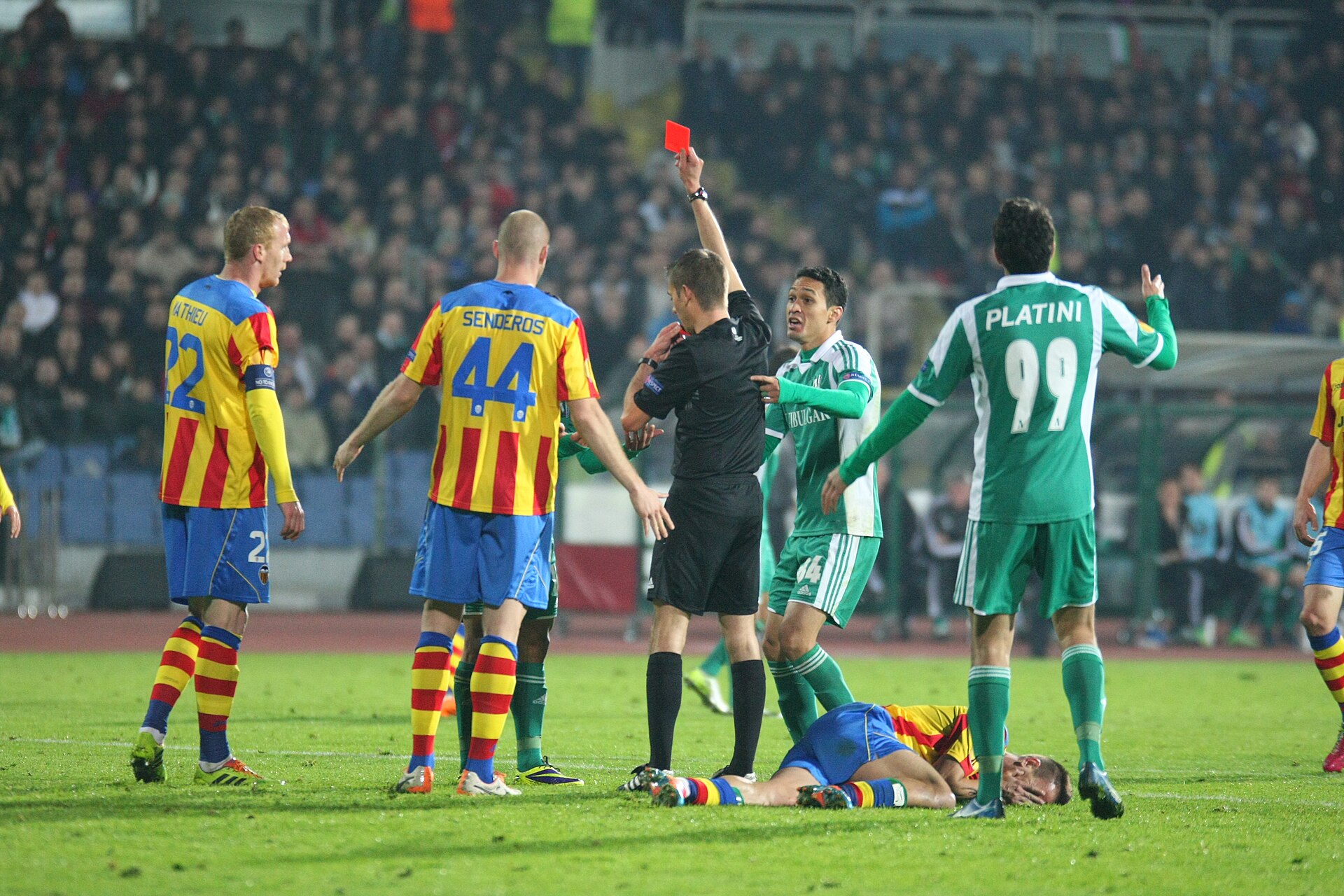
The sending-off takes effect at the next restart
The Laws of the Game are specific about the player. A player who is sent off must leave the field and the technical area. The team continues with one fewer player, and that player cannot simply be replaced by a substitute. IFAB’s Law 3 sets out that consequence; Law 12 covers the misconduct that can produce the card.
For a bettor, the relevant word is “continues.” The result does not get reset because one team is now short-handed. The remaining minutes still count, and the match-winner, total-goals and player markets will settle under the operator’s rules. A red card may make a comeback less likely in the bookmaker’s opinion, but it does not void a pre-match bet on either side unless the competition rules provide for an abandonment or another listed event.
The practical test begins with the clock. A 23rd-minute red card in a goalless game creates more time and more possible shapes than a 78th-minute red card with one team already two goals ahead. The team that receives it may drop deeper, keep a striker on and try to survive, or sacrifice an attacking player for defensive cover. The team with the extra player may move a full-back forward, switch to a back three or change its tempo. The price must reflect the new match, not the old one with a decimal point attached.
A suspended market is not a value signal
When a red card appears, the live market can be suspended while the operator checks the incident, the match feed and the revised prices. TopGamb’s guide to live market suspensions explains the usual operational logic. The pause prevents new bets being accepted on a stale score or an uncertain event.
It is tempting to treat the pause as a secret tip. It is not. It can last long enough for the market to reopen with a much shorter price, and an accepted order can remain accepted even if the screen briefly disappears. If the market reopens with a different line, that is updated pricing. It is not a promise that the next side has become more likely.
This is also the moment when a small stake can feel too small. A bettor who is behind may want to take the newly inflated win price on a comeback. That is the same chase in a faster environment. Use the same unit size you planned before kickoff, or skip the market. A price moving sharply is not a reason to increase the amount at risk.
Three things the new price cannot tell you
First, it cannot tell you how the manager will respond. A red card does not automatically mean every attacker is taken off. Sometimes the short-handed team keeps its most dangerous player and concedes territory deliberately. Sometimes the team with the extra player becomes impatient and leaves space behind. The shape after the next substitution can matter more than the card itself.
Second, it cannot tell you whether the player’s absence extends to the club’s next fixture. A straight red can carry a suspension, while the length and scope depend on the competition’s disciplinary rules. The Premier League’s own guide notes that red-card suspensions can carry across the Premier League, EFL Cup and FA Cup. That is useful information for a future match market, not a reason to alter the current match-winner price by itself.
Third, it cannot tell you whether the event has been recorded correctly. Player identities, the score, the minute and the card can be checked by the feed and the operator. If the settlement depends on who was sent off or whether a player had already left the pitch, the match record matters. This is especially relevant for player props. The player-prop settlement guide explains why the market definition and official statistics should be checked before betting.
The cash-out quote is a repricing, not a refund
A red card often makes a cash-out offer move immediately, sometimes in a direction that feels unfair. The quote is based on the remaining chance of the bet winning under the operator’s pricing, not on the amount originally staked. It can be offered, changed or withdrawn according to the market and the provider’s rules.
TopGamb’s cash-out explainer makes the useful distinction: accepting a quote converts an uncertain position into a known cash result, but it can crystallise a smaller return or a loss. It is not an insurance policy that restores the pre-match price. If cash-out is the only reason for opening the bet slip, the decision has moved from entertainment to loss recovery.
A common mistake is to compare the cash-out offer with the original stake and call the difference a profit. Compare it with the current value of the position, including the chance that the bet loses completely. If the quote is poor and the original bet is still within your planned risk, letting it run may be the simpler choice. If the quote is decent, taking it can be a disciplined exit. Neither choice is guaranteed to be the better outcome.
What to check before the next live bet
Start with the score, the minute and the side affected. Then check whether the red card was a straight dismissal, a second yellow or a decision still being reviewed. Do not assume an overturned card will replay the match; a disciplinary review and a live market are different processes.
Next, look at the substitutions and formation. Did the short-handed team already use its changes? Is its goalkeeper still in the game? Did the manager remove a forward or a defender? A team reduced to ten can still be compact and dangerous from set pieces. A team with eleven can still be poor at breaking down a low block.
Finally, read the market’s settlement sentence. Check whether the bet is on the match winner including stoppage time, a specified 90-minute result, a player to score, or another event that may already be settled. The operator’s rules should control the settlement, and the odds board should be the last thing you consult rather than the first.
Use the pause as part of the wager
A sensible live-football routine can be short: set a session budget before kickoff, decide which markets you are willing to use, and treat a red card as a reason to stop and reread the game. The sportsbook account-controls guide covers timeouts and deposit limits that can make the pause easier to keep.
If the next bet only exists because the first one is losing, leave it. If the next bet is part of the plan and the changed match still fits the reason for it, use a size you can afford to lose. A red card is information. It is not an instruction.
Gambling should remain entertainment with a fixed cost. BeGambleAware offers confidential advice if the urge to chase a live market is becoming difficult to control.
Laws and betting references


New Casino

Main offer: Recurring weekly and monthly activity rewards plus rakeback; amounts depend on VIP rank and prior play.

Welcome bonus: 150% up to €500 + 50 FS

Welcome bonus: 1st Deposit: 100% up to C$400 + 50 FS

Welcome bonus: First: 100% up to C$700

Welcome bonus: 100% up to C$500 + 180 FS

Welcome bonus: 100% up to C$3,000 + 150 FS
Recent news


