A craps buy bet offers a true-odds payout on 4, 5, 6, 8, 9 or 10 in exchange for a commission. Learn how the bet works and what to check before comparing it with a place bet.

A Craps Buy Bet Pays True Odds. The Commission Decides Whether It Was Worth It

A craps buy bet looks like a place bet with a better payout. You choose 4, 5, 6, 8, 9 or 10, then win if that number appears before a 7. The difference is that a buy bet pays the true odds for the point instead of the standard place-bet price, and the casino charges a commission for the arrangement.
The Pennsylvania Code defines a buy bet simply as “a Place Bet to Win which offers a payout of true odds.” A craps guide published by Rocky Gap Casino puts the common commission at 5% and describes it as payment for receiving those true odds. That is the useful starting point. The player has not found a point number that is more likely to arrive before seven. The player has changed how a successful outcome is paid.
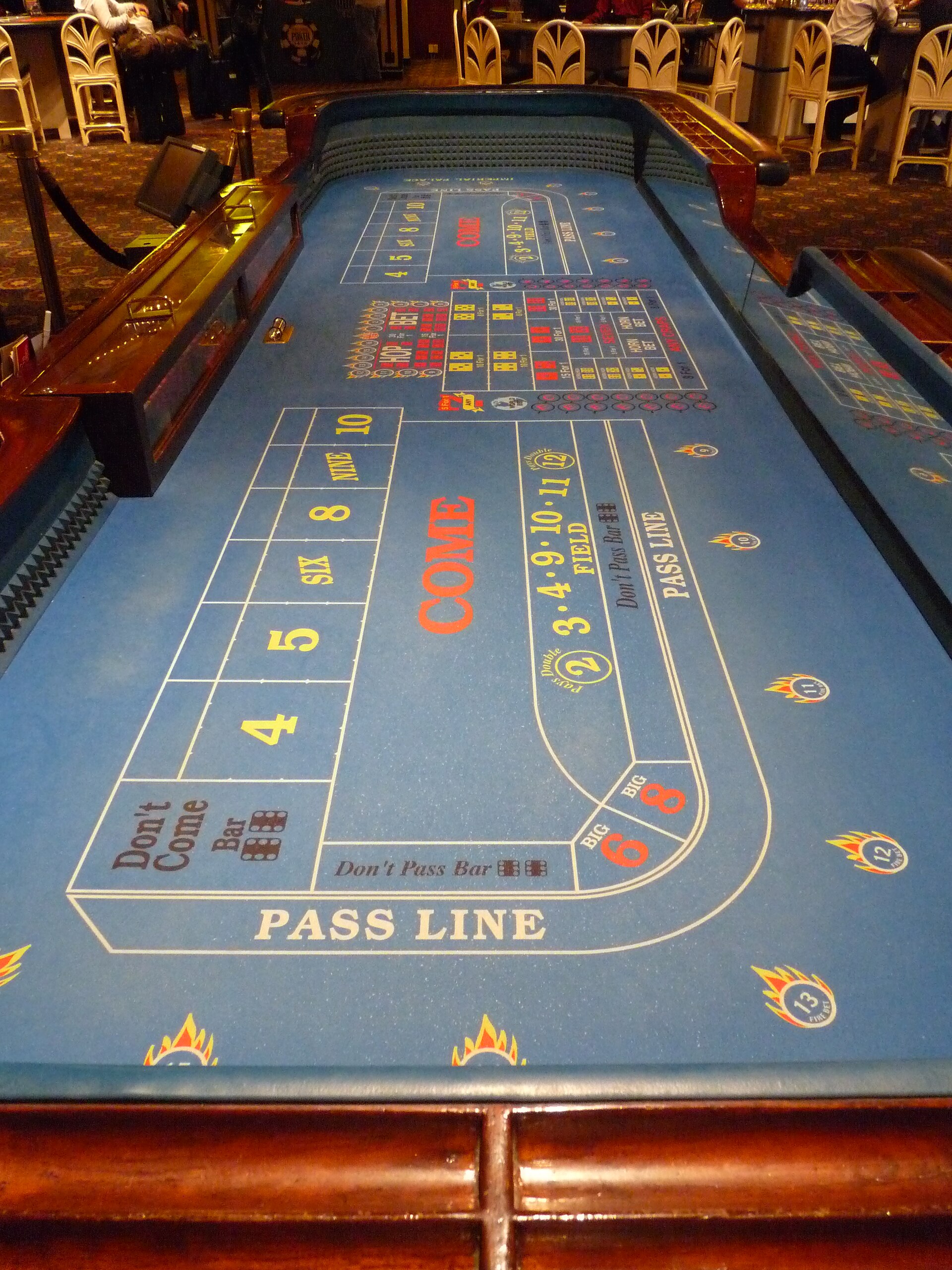
The underlying race stays the same
A buy bet on 4 wins if 4 appears before 7. A buy on 10 follows the same rule. So does a buy on 5, 6, 8 or 9. The dice do not care whether the chip sits in a buy area or a standard place-bet area.
What changes is the return. The true odds reflect how often each number can be made compared with a seven. A 4 or 10 can come in three different combinations while seven has six, so the true-odds payout is 2 to 1. A 5 or 9 pays 3 to 2, and a 6 or 8 pays 6 to 5. A standard place bet usually offers smaller payouts such as 9 to 5 on 4 or 10, 7 to 5 on 5 or 9 and 7 to 6 on 6 or 8.
Those traditional place-bet numbers can vary by table and jurisdiction, which is why the comparison should begin with the posted paytable. The principle is still easy to see: the buy bet moves the payout closer to the true ratio, then adds a fee.
Where the commission enters the calculation
At 5%, a $20 buy on 4 has a $1 commission. If that is collected when the wager is made and the 4 appears before a 7, the true-odds win is $40. The player has put $21 at risk and receives the $20 stake back plus $40, or $60 in total. The net gain is $39 after the commission, not the $40 implied by the 2-to-1 payout alone.
Some properties collect the commission only on a winning bet. Others charge on every placement. Some apply a minimum collection even when 5% of the wager would be a fraction of a chip. Those differences matter more on small bets than large ones.
This is also why a percentage can be less informative than the amount actually paid. A table may quote a 5% vig, but a $10 buy could carry a $1 collection because of the table’s chip minimum, turning the charge into 10% of that particular stake. Ask the dealer before assuming the commission is proportional at every amount.
A better payout is not the same as a better forecast
The buy bet can improve the payout structure relative to a place bet, but it does not change the probability of the next roll. It also cannot erase the statistical cost built into a casino game.
If a buy price appears stronger, check three things together: the payout, the full commission and the minimum wager that can carry it. Comparing a buy bet’s true odds with an advertised place price while ignoring the vig can make the better option look better than it really is.
TopGamb’s house-edge explainer covers why payouts and probabilities should be read together. The same idea applies to the rest of the craps layout. A lower-cost version of a wager is worth understanding, but it remains one bet in a game with uncertainty.
The marker and the table language
Craps moves quickly, and not every property uses identical language. A player may need to tell the dealer they want the bet “working” or ask whether it is active on the next roll. The Pennsylvania rules note that place bets can be inactive on a come-out roll unless called on by the player and marked by the dealer.
Buy bets sit inside that family of place-to-win wagers. Do not assume a stack of chips has the same status at every point in the game merely because it stayed on the table. If the dealer uses an “on” marker, ask what it means before the dice leave the shooter’s hand. If the bet is removed or reduced, confirm the change and the commission treatment.
TopGamb’s beginner’s craps guide is useful for the table layout, while the craps strategy guide puts individual wagers in a broader context. Neither changes the need to understand the exact buy rule where you are playing.
Two questions worth asking at the table
Is the commission taken before the roll or after a win? The answer changes the cash required to keep the bet and should be known before the wager is accepted.
Does the minimum include the commission? A table may require a stake large enough for the percentage to produce a payable chip amount. The posted minimum on a place bet is not always the full amount needed for a buy.
A buy bet is best understood as a pricing choice. It offers true odds and a different commission structure. It does not offer control over the dice or a way to recover an earlier loss. Decide the session budget before approaching the table, use a fixed loss limit and avoid adding buy bets to chase a run. If the staking is no longer comfortable, stop and consult a service such as GamCare or a local support organisation.
Rules and further reading


New Casino

Main offer: Weekly bonus and rakeback on every eligible wager.

Welcome bonus: 150% up to €500 + 50 FS

Welcome bonus: 1st Deposit: 100% up to C$400 + 50 FS

Welcome bonus: First: 100% up to C$700

Welcome bonus: 100% up to C$500 + 180 FS

Welcome bonus: 100% up to C$3,000 + 150 FS


