A dealer shoe and a continuous shuffling machine handle cards differently. The distinction affects shuffling rhythm, card counting and the number of hands played in a session.

Dealer Shoe or Continuous Shuffler: The Difference a Blackjack Player Can Feel

A dealer shoe and a continuous shuffling machine can put a blackjack table in the same casino, under the same house rules, while changing the rhythm of every hand. One deals from a finite stack that is reshuffled after a cut card appears. The other keeps returning played cards into a shuffling mechanism during the game, so the dealer spends less time stopped between batches.
That mechanical difference is often reduced to “the machine stops card counters.” The practical effect is real, but the sentence skips several steps. A continuous shuffler does not rewrite the payout for a natural or make a bad table rule disappear. It changes how much information a player can gather about cards already dealt and how many hands can be completed in an hour.
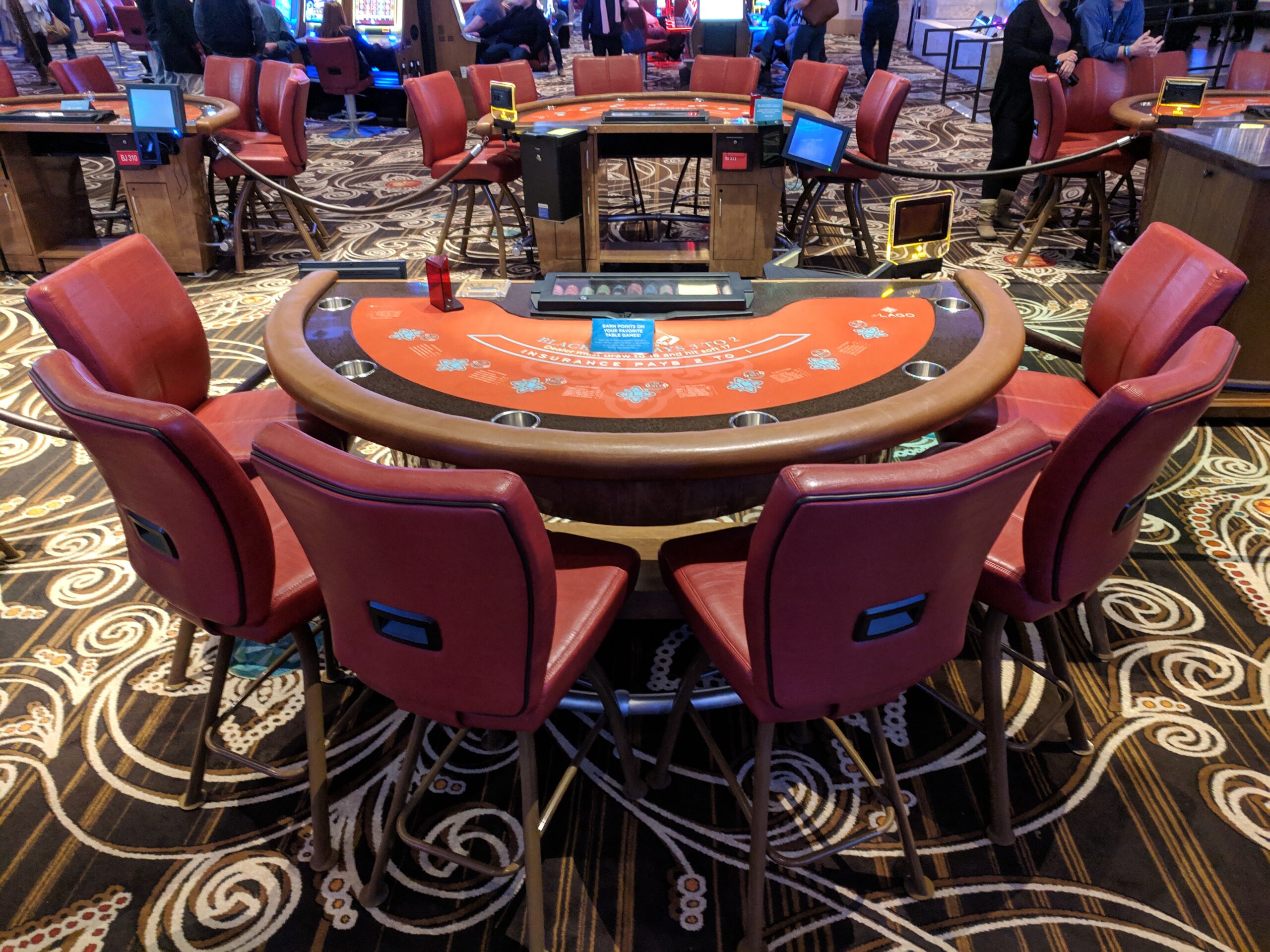
The dealer shoe is a finite batch
A dealing shoe holds one or more decks in a stack. The dealer feeds cards from the front, while completed hands and exposed cards go to the discard area. A cut card is placed into the stack so the dealer knows when the remaining cards have reached the reshuffle point. The PA Code uses the term “automated card shuffling device, other than a continuous shuffler” for equipment that prepares batches and can alternate them with play.
Shuffle penetration is the amount of the stack a casino deals before returning the cards to the shuffler. The exact procedure depends on the game, casino and regulator, but the broad principle is consistent: the set of unseen cards changes as cards leave the shoe, and the dealer’s reshuffle restores a broader mix.
A player who tracks high and low cards is trying to estimate when the remaining stack is unusually favourable or unfavourable. That is the basic foundation of card counting. It is not a guarantee of a winning hand, and a proper counter still has to use strategy and manage risk. The point here is only that finite-shoe play gives the count something to measure.
A continuous shuffler keeps reintroducing cards
A continuous shuffling machine, often shortened to CSM, returns discarded cards into the shuffling unit while the next hand is dealt. The machine feeds a fresh card from a small buffer, so the game does not have to wait for a complete batch shuffle between shoes. The 2003 Shuffle Master patent cited below describes an electromechanical apparatus built around continuous shuffling and card monitoring.
“Automated shuffler” is not a synonym for CSM. Some devices prepare a complete batch and store it for the next shuffle; another batch is used for play. A casino may call both machines automatic because the dealer does not perform the shuffle by hand. The visible machine alone does not tell you which procedure is operating.
The CSM also does not mean every card instantly becomes equally likely to be the next card. Machine design, buffer size, dealing sequence and approved procedures matter. What the CSM removes is the long interval in which a player can watch a finite shoe deplete and infer the changing composition of the remaining stack.
Why traditional card counting becomes ineffective
A running count records cards seen and estimates the ratio of high to low cards still unseen. On a finite shoe, that estimate can become more valuable toward the end of a deal when more cards have been exposed. The player may raise a wager when the remaining stack looks rich in tens and aces, subject to the casino’s rules and tolerance.
When played cards immediately re-enter the shuffle, the information from the previous hand has little time to stay useful. The aggregate composition has been stirred back into the remaining cards. A count can still tell the player about the last hand, but it cannot build into the same multi-hand edge before a reshuffle.
That makes ordinary running-count play impractical against a CSM. It does not prove that every possible method of advantage play disappears, and it should never be presented as a secret route to beating the machine. Claiming certainty in either direction confuses a card-counting measure with a universal mathematical proof.
The house edge is a rule sheet first
The base house edge in blackjack is determined mainly by the rules: whether blackjack pays 3:2 or 6:5, what the dealer does on soft 17, whether doubling and splitting options help, whether surrender is offered and how many decks are used. A CSM does not make a 6:5 table competitive with a good 3:2 game. The soft-17 guide explains one of the clearest examples of how a rule changes value.
Pace is a separate cost. With fewer shuffle breaks, the table can play more hands per hour. An expected loss of a small percentage of each wager becomes a larger expected loss over more wagers, even if the house edge on each hand remains the same. A person comparing sessions should therefore look at hands per hour, wager size and total time, not only the published long-run return.
The house-edge explainer sets out that relationship without pretending the next hand is predictable. The machine changes the rhythm and the opportunity to count; it does not create a guaranteed pattern in the next card.
What should a player ask at the table?
First, identify the actual feeding method. Is the dealer dealing from a static shoe, a batch shuffler or a device that returns played cards continuously? Second, count the decks and find the cut-card procedure. Third, read the payout and dealer rule before buying in. A lower table minimum is not automatically a better deal if the game returns only 6:5 on a blackjack.
If pace is the concern, set a time limit and a loss limit before the first hand. The table-minimum guide is useful for turning a chip value into a session budget. A CSM can make 20 minutes contain more wagers than a hand-shuffled table, so “I only played for a quarter of an hour” is not a complete account of exposure.
Avoid treating a faster table as a proof of skill. If the machine is producing more hands, the player’s decisions still need to stay consistent. Chasing a losing shoe is especially misleading when there is no memorable shoe ending to chase. The blackjack pacing guide covers the same pressure in live-dealer products.
The useful summary
A dealer shoe deals from a finite batch and eventually returns the used cards to a full reshuffle. A continuous shuffler feeds played cards back throughout the game and blunts the information a traditional running count needs. Neither machine overrides the table rules, and neither guarantees an outcome.
For a recreational player, the practical difference is speed and counting context. For a bettor who has set a budget, more hands per hour are still more chances to lose money, which is why the time limit belongs beside the stake limit. If the pace makes it hard to stop, leave the table and use a support service such as GambleAware rather than chasing the next shuffle.
Rules and technical notes
- Pennsylvania Code: Blackjack cards, number of decks and automated shufflers
- Pennsylvania Code: Blackjack shuffle and cut procedures
- New Jersey casino regulations: Blackjack, including continuous shuffling shoe or device
- Patent US6588751B1: Device and method for continuously shuffling and monitoring cards
- GambleAware: Support and advice


New Casino

Main offer: Recurring weekly and monthly activity rewards plus rakeback; amounts depend on VIP rank and prior play.

Welcome bonus: 150% up to €500 + 50 FS

Welcome bonus: 1st Deposit: 100% up to C$400 + 50 FS

Welcome bonus: First: 100% up to C$700

Welcome bonus: 100% up to C$500 + 180 FS

Welcome bonus: 100% up to C$3,000 + 150 FS
Recent news


