Coloring up means exchanging a pile of lower-value chips for fewer chips of the same total face value. It changes the shape of the stack, not the amount of money it represents.

A Casino Chip Color-Up Does Not Add Value. It Makes the Stack Easier to Count

A color-up begins with a practical problem: the player has a messy pile of chips and the dealer needs to count it without slowing the table to a stop. The dealer exchanges lower-value chips for fewer chips carrying the same total face value. Nothing has been won or lost in the exchange. The stack simply becomes easier to verify, carry and redeem.
“Color up” usually means moving upward into larger denominations. “Color down” is the reverse: breaking a larger chip into smaller ones. Washington’s table-inventory rule uses the two terms together and permits the exchange when the chips received by the table have the same total face value as the chips issued back to the player. That equal-value condition is the whole point.
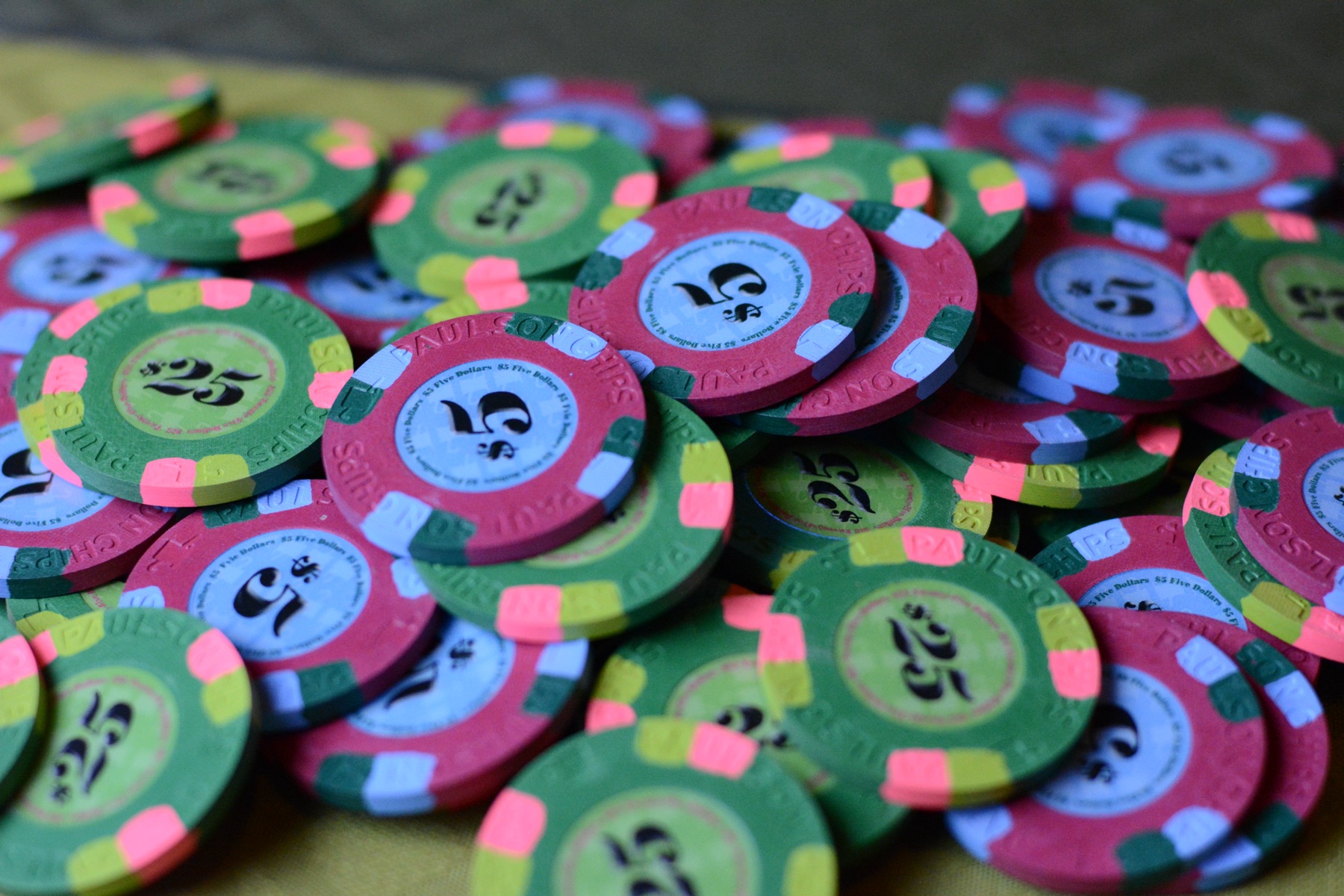
Fewer chips should still mean the same money
Imagine eight $25 chips. A color-up may replace them with four $50 chips, two $100 chips or another combination accepted by the property. Each version represents $200. The number of discs falls; the face value does not.
A table has to account for the change because its chip inventory is not supposed to gain or lose value merely because a dealer improved the presentation of a player’s stack. The equal-value exchange is recorded in how the transaction is performed, even though the player does not receive a new cash receipt. The dealer and the table inventory remain part of the same accounting system.
This is why the count should happen in public view and before the chips leave your possession. Leave the stack on the table, let the dealer count it and confirm the replacement total. If the count looks different, ask for it to be repeated before accepting the new chips.
Color is a clue, not a universal denomination system
Most casino value chips carry their denomination on the face because a colour alone is not a reliable global code. Pennsylvania’s table-game equipment rules define value chips as chips with a denomination on each face and require primary colours for each denomination, with restrictions intended to prevent confusion. Those requirements apply within that regulatory system; another jurisdiction or property can use a different palette.
That makes “red is always $5” a poor rule for a player moving between casinos. Read the number on the chip and the table’s posted information. A chip that looks familiar can belong to a different property, denomination or period. Value is attached to the operator’s approved chip, not to the colour in isolation.
The distinction becomes especially important after play. A chip from another casino may not be redeemable at the cage where the player is standing. Before treating a chip as cash, check the property name, the denomination and the venue’s redemption rule. TopGamb’s guide to non-negotiable chips covers a different restriction: a promotional chip may look like value but have conditions attached to it.
When to ask for a color-up
Many players ask when they are leaving a table, moving to a higher-limit area or simply finding the stack difficult to manage. The dealer or pit supervisor controls the exchange. The useful sequence is to end the active wagers first, bring the stack into one clear pile and ask for a color-up before leaving.
Do not slide chips toward the dealer and walk away before the replacement count is confirmed. Do not combine chips that belong to different players unless the table has explicitly handled the settlement. And do not assume a tower of chips carries more value because it is taller. A shorter stack of larger denominations can represent much more.
Online casino players will not normally encounter a physical color-up inside a game. Their displayed balance is the relevant amount. Changes to that balance should come from a wager, settlement, deposit, withdrawal or defined bonus adjustment, not from an unexplained change in the appearance of a chip image. TopGamb’s guide to casino markers helps separate a chip held at the table from credit that creates a debt.
A color-up is not a cash-out receipt
There is a second exchange after the table session: presenting casino chips at the cage for cash or another approved form of settlement. A color-up happens at the table and preserves the face value in chip form. A cage redemption ends the player’s possession of the chips and follows the property’s own cashier, identification and payment rules.
A slot ticket or electronic cash-out voucher also has a separate process. It records a balance tied to a machine or system and may expire under jurisdiction-specific rules. Casino chips, markers and machine tickets can all represent value, but they are not interchangeable documents.
The table minimum is another common source of confusion. A sign saying “$10 minimum” usually describes the wager required to enter a game, not a guarantee that every cash-out can be made entirely in the denominations the player prefers. TopGamb’s table-limits guide explains how minimum and maximum limits shape access, while the house-edge explainer reminds players that changing the size of the stack does not change the mathematical cost of the game.
Two questions worth asking at the table
Can you count it while I watch? The answer should make the exchange legible. Watch the incoming stack and the replacement chips, then confirm that both sides represent the same total.
Are these the same kind of chips? Tournament chips, non-negotiable promotional chips and value chips are not treated alike even when they have familiar colours. Ask before the dealer removes the stack.
Color-up is a careful accounting routine, not a chance to improve a result. Set the session budget before sitting down, keep track of total face value rather than the number of discs and stop when the limit is reached. If the game is no longer comfortable, BeGambleAware and local support services can help with a break or stronger account restrictions.
Table-game rules and references


New Casino

Main offer: Recurring weekly and monthly activity rewards plus rakeback; amounts depend on VIP rank and prior play.

Welcome bonus: 150% up to €500 + 50 FS

Welcome bonus: 1st Deposit: 100% up to C$400 + 50 FS

Welcome bonus: First: 100% up to C$700

Welcome bonus: 100% up to C$500 + 180 FS

Welcome bonus: 100% up to C$3,000 + 150 FS
Recent news


