The dealer’s ace-king qualification is the hinge in Caribbean Stud Poker. It determines whether only the ante settles or whether the player’s doubled bet enters the hand too.

Why Ace-King Decides Nearly Every Caribbean Stud Hand

Caribbean Stud Poker can look like a simple comparison of two five-card hands until the dealer reveals four hole cards and the table starts separating the wagers. The dealer must have at least ace-king high to “qualify”. That single threshold decides whether a player’s doubled bet is settled or simply returned.
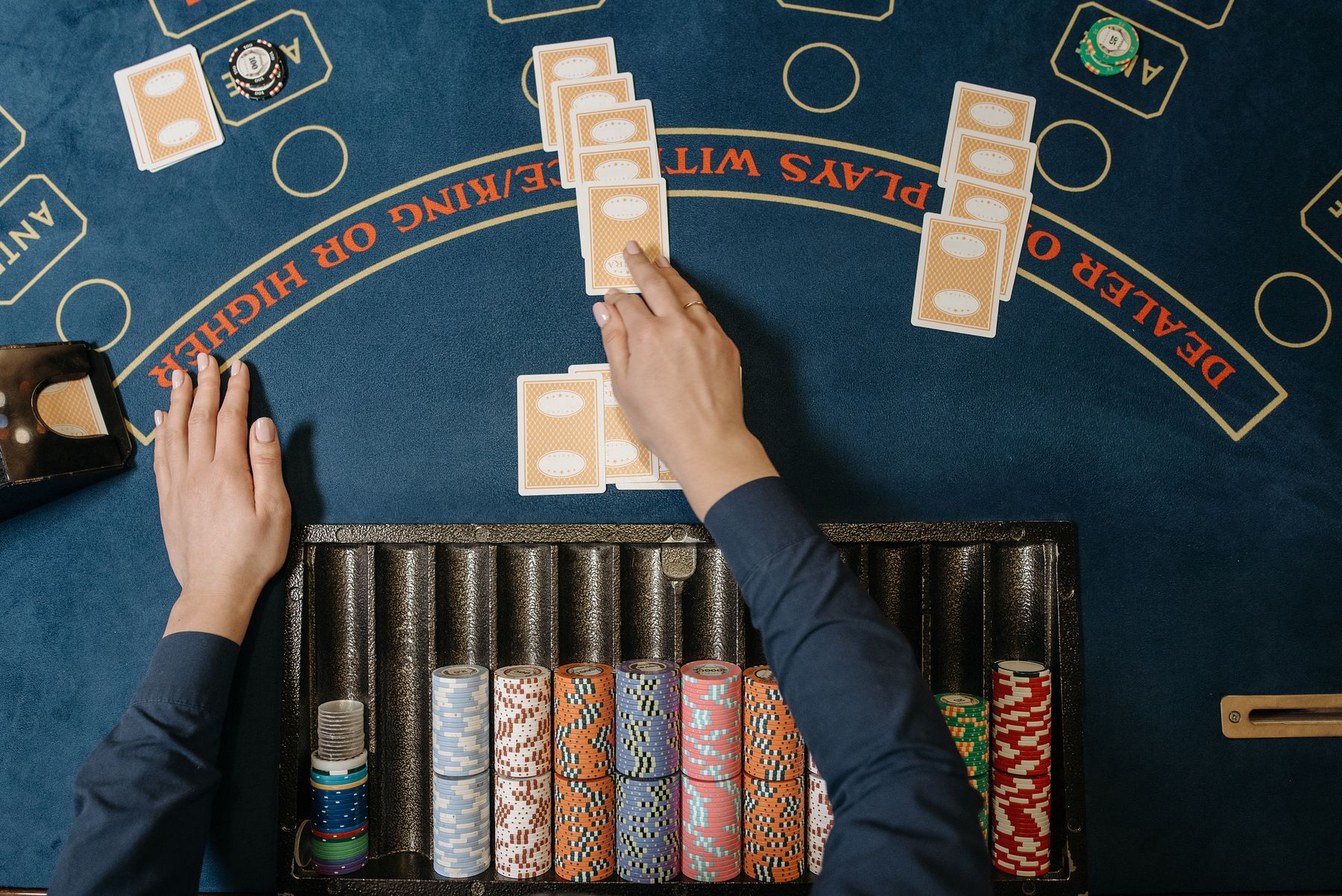
Every player begins with an ante and receives five cards face down. One dealer card is exposed and four remain hidden. After looking at their hand, each player either folds and loses the ante or makes a bet wager equal to exactly twice the ante. The dealer does not reveal the remaining cards until those decisions are complete.
Ace-king is a rank, not a secret hand
The qualifying test is applied to the dealer’s best five-card poker hand. A pair, two pair, trips, straight, flush or any stronger combination automatically ranks above ace-king. So does a high-card hand whose best cards run from ace downward through king, such as ace-king-queen-jack-nine.
If the dealer’s best hand ranks below ace-king—for example, an ace-high hand without a king among its five highest cards—the dealer has not qualified. The player’s bet wager is returned, and the ante pays 1 to 1. The player wins that ante even if their own hand would have lost to the dealer’s unqualified hand.
This is why the dealer’s exposed card is useful but not conclusive. An ace can make qualification likely; it does not guarantee that the four hidden cards will produce ace-king high or better. A king showing does not guarantee qualification either. The final five-card combination is what matters.
When the dealer qualifies, the hands are compared
Once the dealer has ace-king high or better, the round becomes a conventional hand comparison. If the player’s hand ranks higher, the ante and bet wagers both win. If the dealer’s hand ranks higher, both lose. If the hands have identical poker rank, both wagers push.
The ante always pays 1 to 1 when it wins. The bet wager pays according to the table’s posted payout schedule. In Pennsylvania’s published table, a royal flush pays 100 to 1 on the bet wager, a straight flush 50 to 1, four of a kind 20 to 1, a full house 7 to 1, a flush 5 to 1, a straight 4 to 1, three of a kind 3 to 1, two pair 2 to 1 and a pair or less 1 to 1.
Those odds are not universal. The amount and payout schedule can differ by jurisdiction, casino and side-wager package. Read the table layout before placing the ante; a familiar game name does not guarantee identical terms.
An unqualified dealer can flatten a large hand
Suppose the player finishes with a flush and the dealer holds a qualifying pair. The dealer qualifies, the player’s flush wins, the ante pays 1 to 1 and the bet pays the flush payout shown on the table—5 to 1 in the Pennsylvania schedule.
Now change only the dealer’s hand to ace-high without a king. The dealer does not qualify. The player’s bet is returned and the ante pays 1 to 1. The flush does not collect its larger bet payout because the bet wager is not competing against a qualifying dealer hand. Optional side wagers follow their own rules and may still pay, but they should not be confused with the main bet.
This result often surprises new players. A strong poker hand protects the main wagers when qualification occurs. It cannot force a non-qualifying dealer into a full showdown.
The fold is a separate decision
Folding before the dealer reveals the hand ends participation for that player in the main game. The ante is lost. A player cannot fold cheaply and then claim the ante if the dealer turns out to be unqualified.
That creates the central trade-off. Calling the doubled bet exposes two more units to the dealer’s possible qualifying hand. Folding limits the loss to one unit but gives up the chance to win when the dealer fails to qualify. Knowing the ace-king rule explains the settlement, but it does not eliminate the uncertainty.
Starting hand quality still matters because the player must decide before seeing the dealer’s complete hand. A weak hand faces two problems at once: it may lose the doubled bet if the dealer qualifies, and its ante-only win may be limited when the dealer does not.
Read the whole table before sitting down
Check the ante minimum, the exact bet-wager multiple, the payout schedule and every optional wager. A $10 ante plus a $20 bet commits three units, or $30, in the main game. A side bet adds another cost without improving the main hand’s chance of winning. TopGamb’s side-bet checklist is a useful comparison before adding any extra wager.
The push rule is another detail worth recognising. A tied main hand returns the ante and bet, as explained in the push guide. Caribbean Stud uses different rules from blackjack, but the principle is the same: a pushed wager is returned, not paid as a win.
Caribbean Stud’s ace-king gate is ultimately a rule about who has to expose the rest of the wager. When the dealer qualifies, the full hand goes to showdown. When the dealer does not, the player earns the ante and gets the double bet back. A clear pre-play rules check, a fixed session budget and a realistic expectation of the house edge matter more than trying to rescue a weak hand.
Treat the table maximum as the cost of playing several hands, not one. If the ante, bet and side wagers make a single round uncomfortable, the table minimum is already too high for that session.
Current table-game rules


New Casino

Main offer: Recurring weekly and monthly activity rewards plus rakeback; amounts depend on VIP rank and prior play.

Welcome bonus: 150% up to €500 + 50 FS

Welcome bonus: 1st Deposit: 100% up to C$400 + 50 FS

Welcome bonus: First: 100% up to C$700

Welcome bonus: 100% up to C$500 + 180 FS

Welcome bonus: 100% up to C$3,000 + 150 FS
Recent news