A Pai Gow Poker hand is not judged as one seven-card combination. It is split into five cards and two, and the round can end in a loss, a push or a 5% commission before a winner collects the profit.

Pai Gow Poker: Seven Cards, Two Battles and a Banker Who Wins Ties

A Pai Gow Poker split hand begins with seven cards and one easy mistake: trying to read them as a single poker hand. The player has to split those seven cards into a five-card high hand and a two-card low hand. Both are compared with the banker’s corresponding hand, and the result comes from two separate contests.
In the Pennsylvania rules, the game uses a standard deck plus one joker. The joker may act as an ace or complete a straight, flush, straight flush or royal flush. Some casino variants use different joker restrictions, so the table rules should be read before treating one version as universal.
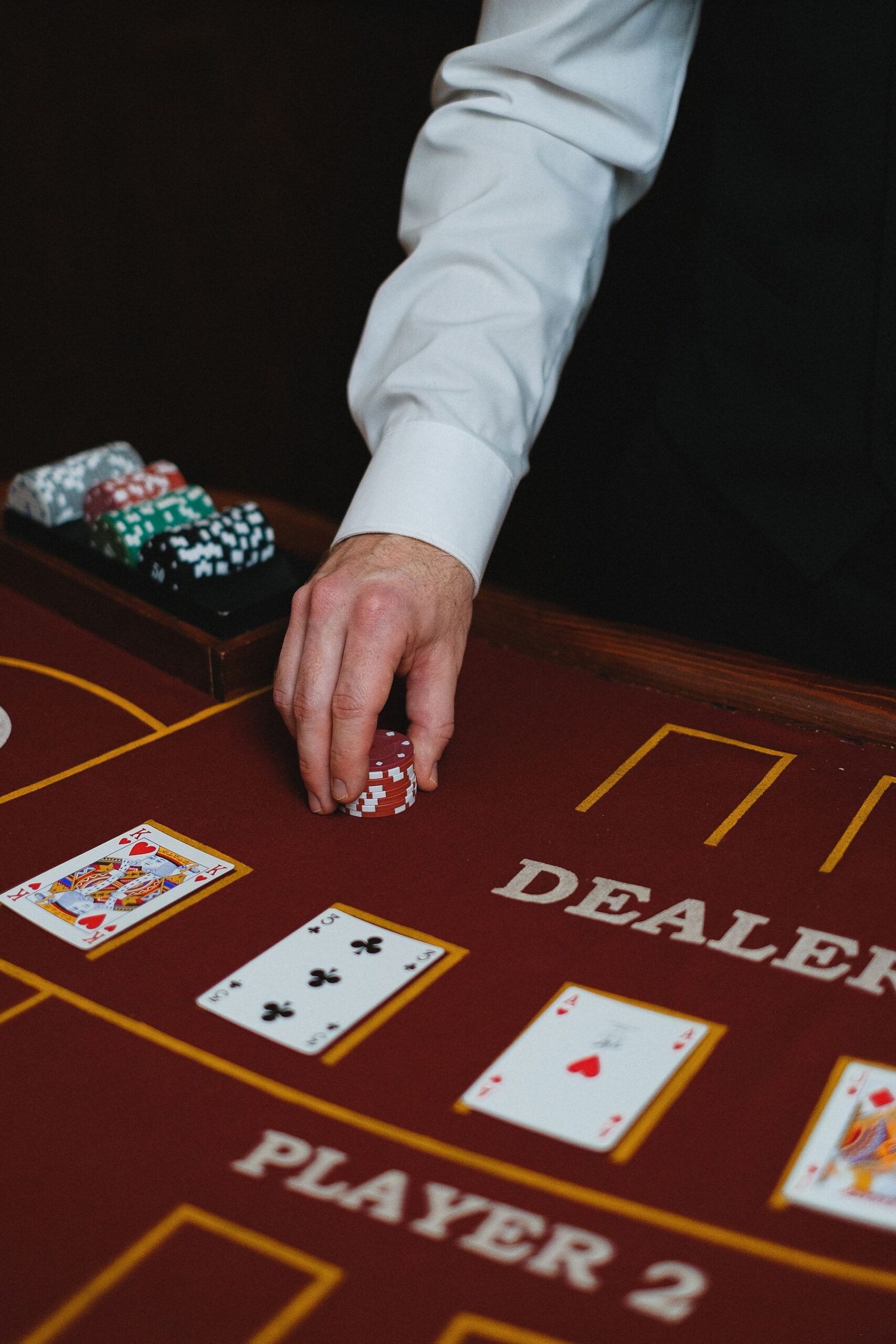
A Pai Gow Poker split hand has a five-card lead and a two-card check
The five-card hand must rank equal to or higher than the two-card hand. Suppose a player holds A-A-Q-Q-J-8-3. A possible setting is A-A-Q-Q-J as the high hand and 8-3 as the low hand. It uses every card and leaves the stronger combination in the five-card slot.
A tempting alternative might put A-A in the low hand and Q-Q-J-8-3 in the high hand. That is not valid because the two-card pair of aces outranks the five-card pair of queens. The high hand is supposed to lead. A table’s house way may prescribe a particular arrangement, but the basic hierarchy remains part of both the player and dealer setting rules.
The two-card hand can include a pair or high cards. A pair of sevens low, for example, requires the high hand to contain at least a pair of sevens. When the cards do not divide neatly, the player is trading strength between the two sides rather than making both stronger.
Win both, lose both or split the round
After the player sets the hand, the banker’s seven cards are arranged under the table’s house way. The dealer compares the player’s high hand with the banker’s high hand and the player’s low hand with the banker’s low hand.
If the player wins both comparisons, the wager wins. If the player loses both, the wager loses. If one comparison wins and the other loses, the wager pushes and is returned. This is why Pai Gow Poker has a slower rhythm than many table games: a good five-card hand does not rescue a weak two-card hand if the banker wins the other side.
Ties are the less intuitive part. In the standard game described by Pennsylvania’s rules, the player must win both comparisons against the dealer or banker. If a hand is identical or the player loses that side of the comparison, and the other side does not produce a win, the wager loses. The copy goes to the banker. A player who wins the high hand but ties the low hand does not get a push under that rule.
This is not the same as a blackjack push or a baccarat tie. Those games have their own settlement rules. In Pai Gow Poker, the table is asking whether both independent hands beat the banker, with ties resolved in the bank’s favour. TopGamb’s side-bet guide makes the same distinction for optional wagers: a familiar-looking word does not guarantee the same outcome.
The five per cent commission changes a profit, not the stake
A standard winning Pai Gow Poker wager pays 1 to 1, but the casino takes a vigorish from the winning amount. Pennsylvania’s rule sets the collection at 5% of the amount won and says the commission is collected when the winning payout is made. A jurisdiction or property can use different rounding rules, so the smallest bets can carry a proportionally larger charge.
Imagine a $100 win before commission. The wager receives the original $100 plus a $100 profit, and the 5% commission takes $5 from that profit. The player finishes $95 ahead on the winning round, before considering other stakes in the session. If the commission is rounded up to the nearest 25 cents, the exact amount due can differ from a simple percentage on a small bet.
Commission-free Pai Gow Poker exists. Pennsylvania has a separate chapter for a version with no vigorish, but it changes other rules, including the treatment of a Queen’s Dragon. “No commission” is therefore not automatically a better game. Compare the complete rule card, including special pushes and the banker’s role, with the standard 5% game. TopGamb’s house-edge explainer gives the wider context.
Who is the bank, and why the table looks different after a hand?
The dealer or casino is the banker in the basic game. Some tables also allow players to bank. When a player banks, the other players compare their hands with the banker’s hand rather than the dealer’s. The banker’s advantages and obligations can change the flow of the table, and many casinos rotate the bank or offer co-banking under posted rules.
Do not assume that an empty betting circle, a button or a change in who receives ties means the game is simply the same from hand to hand. Ask the dealer to explain the bank marker before sitting in. The game-rules checklist is especially relevant when a table offers variants such as EZ Pai Gow, Fortune Bonus, Queen’s Dragon or player banking.
Optional wagers also deserve separate thought. A Fortune Bonus can pay on the seven cards regardless of the main hands, but it is another stake with its own paytable and variance. It does not improve the two comparison hands. Treat it as a second decision rather than as a discount on the main game.
A practical way to read a Pai Gow Poker split hand
First, identify the strongest five-card combination and the cards left for the low hand. Next, check whether the five-card hand still ranks high enough above the two-card hand. Then check the table’s house way and any side bets before the cards are set. Do not count a push as a win, and do not assume a five-card victory will cover a weak low hand.
TopGamb’s table-limit guide is useful before choosing a stake because the main wager, side bets and repeated pushes all consume attention and bankroll at different speeds. Set a session loss limit before play. Pai Gow’s slower pace can make a session feel inexpensive even while the total amount at risk grows.
If a Pai Gow Poker split hand is not clear from the table rules, stop before the cards are dealt. A game that looks like another card-table variation is often a different contract once the banker, copy hand and fee are included. For anyone worried that play is becoming difficult to control, BeGambleAware and local support services can provide confidential help.
Pai Gow Poker rules and responsible-play references


New Casino

Main offer: Recurring weekly and monthly activity rewards plus rakeback; amounts depend on VIP rank and prior play.

Welcome bonus: 150% up to €500 + 50 FS

Welcome bonus: 1st Deposit: 100% up to C$400 + 50 FS

Welcome bonus: First: 100% up to C$700

Welcome bonus: 100% up to C$500 + 180 FS

Welcome bonus: 100% up to C$3,000 + 150 FS
Recent news